Healthy Children Need Healthy Places to Learn
Every child deserves to learn in a school that is clean, healthy, safe, and prepared for a changing climate.
October’s Children’s Health Month is an opportunity for parents, educators, school leaders, health professionals, advocates, and communities to focus attention on the environmental conditions that shape children’s health where they live, learn, and play.
Children can be especially vulnerable to environmental hazards because their bodies and organs are still developing, their behavior can increase exposure, and they breathe, eat, and drink more relative to their body size than adults.
For Healthy Schools Network, October is also a time to remind decision-makers of something fundamental:
A healthy school building is essential infrastructure for children’s health and learning.
This month, join us in learning, sharing resources, asking questions about the conditions in our schools, and taking action to create healthier learning environments.
New Report: School Facility Problems Are Costing Millions of Children Days of Learning
A major report from the U.S. Government Accountability Office (GAO) puts new numbers behind a problem school communities have experienced for years: Deteriorating and poorly maintained school buildings can directly disrupt children’s education.
GAO’s September 2026 report, K-12 Education: Facility Issues Led About One in Five Districts to Cancel School in 2024-25, Affecting 2 Million Students, finds that an estimated 19 percent of public school districts canceled school because of a facility issue during the 2024-25 school year. Those cancellations affected an estimated 2 million children and resulted in approximately 3.5 million lost days of learning.
GAO estimates that
- 47 % of school districts experienced chronic facility issues in at least one school.
- 55% of districts reported that their most recent facilities budgets were insufficient to meet their needs.
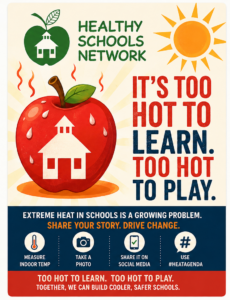
- Among districts with chronic facility problems, common issues included water intrusion and excessive heat or cold in classrooms, along with plumbing, ventilation, structural, and other building problems.
GAO also found that plumbing, electrical problems, and classroom temperature issues were among the most frequent causes of facility-related school cancellations. In one school GAO visited, classroom temperatures reached 110°F, resulting in an emergency closure.
Why This Matters for Children’s Environmental Health
The report is a timely reminder that the condition of a school building is not separate from children’s health or education.
A leaking roof can become a moisture and mold problem. Failing ventilation can become an indoor air quality problem. Inadequate heating and cooling can expose children and staff to unhealthy temperatures. Deferred maintenance can allow manageable problems to become expensive emergencies.
GAO found that districts with limited capacity to conduct preventive maintenance experienced more chronic facility problems and more disruptions to instruction.
Healthy Schools Network encourages school communities to use these new findings to start conversations about the condition, maintenance, environmental health, and long-term resilience of the buildings children occupy every school day.
Get Involved: Children’s Health Month
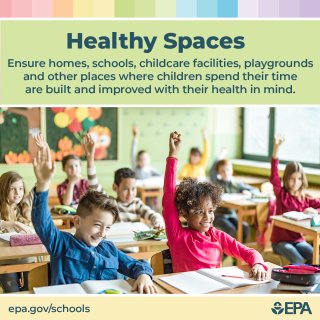
The US Environmental Protection Agency (EPA) recognizes October as National Children’s Health Month, highlighting the importance of protecting children from environmental risks.
EPA offers a Children’s Health Outreach Toolkit with factsheets, graphics, social media content, publications, and other materials that organizations can use to spread the word throughout October. EPA is encouraging partners to use #ChildrensHealthMonth, #ProtectKidsHealth, and #ChildHealth in social media communications.
Share the Message
Schools, PTAs, health departments, environmental organizations, educators, and community partners can use October to
- Share information about children’s environmental health with families and staff.
- Highlight indoor air quality, lead, mold and moisture, safer chemicals, extreme heat, asthma triggers, and other school environmental health issues.
- Conduct a school environmental health walkthrough.
- Ask how your school or district identifies and addresses environmental health concerns.
- Share federal and Healthy Schools Network resources with your community.
EXPLORE EPA CHILDREN’S HEALTH MONTH → EPA Children’s Health Month resources
GET THE OUTREACH TOOLKIT → EPA Children’s Health Outreach Toolkit
School Educator Health Survey: The First National Evidence-Based Information Collection Connecting School Building Conditions To Educators’ Health
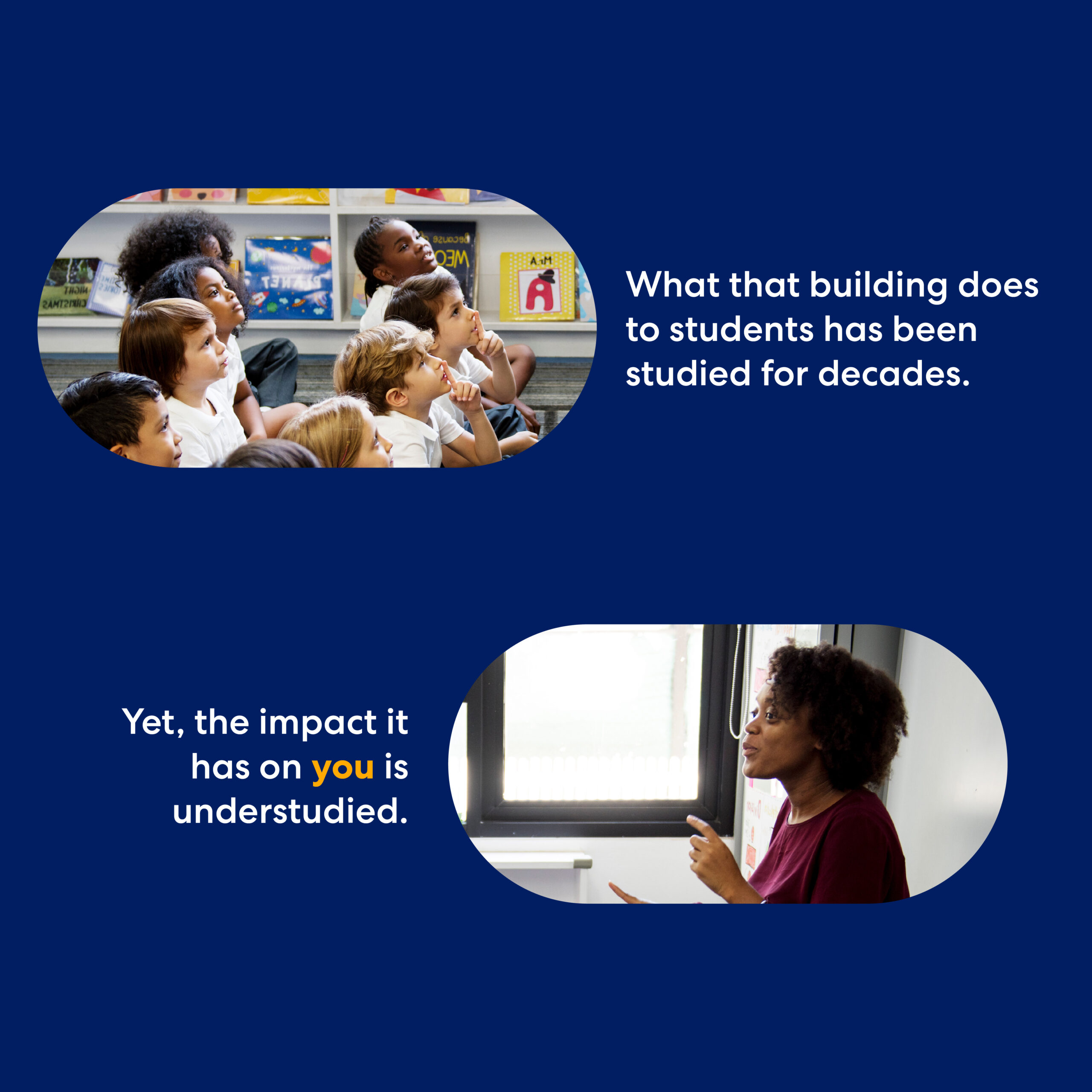
Schools are among the most female-dominated workplaces in America. Seventy-seven percent of US public school teachers are women. Yet occupational health research has largely been built elsewhere, on male bodies, in male-dominated industries, and research on school buildings has focused almost entirely on how they affect students.
The Educator Health Survey is a national study of K–12 educators, conducted by AREA Research in collaboration with Perkins&Will, with a particular focus on women’s health experiences. It asks about lighting, air quality, temperature, acoustics, restroom access, and space to take a break, as well as health across the course of a career in schools. This survey will be available on October 5th at this link: healthyk12.pw/survey.
It’s time to #HearOurTeachers
Questions: educatorhealthsurvey@arearesearch.org
Healthy Schools Network Board Member Mansel Nelson To Receive Community Award
The Children’s Environmental Health Network will recognize Healthy Schools Network Trustee Mansel Nelson, MS on October 8th in Washington, DC, for his role in advancing science, policy, advocacy, and creativity to ensure all children can grow up in safe and healthy environments.
Mansel joined the Institute for Tribal Environmental Professionals (ITEP) in 1998 as the senior program coordinator for the Tribal Environmental Education Outreach Program (TEEOP) at Northern Arizona University. He works with professionals, educators, and students to show how mathematics, science, and technology can be applied to understanding local and global environmental issues. He also organizes support for tribes and schools on indoor air quality.
Mansel completed a BS in chemistry and an MS, in chemical engineering. During fourteen years of military service in the US Army Chemical Corps, he held a variety of positions, including platoon leader, company commander, chemical operations officer, chemist, and chemical engineer. Following his military service, Mansel taught chemistry on the Navajo Nation for six years, exploring issues such as uranium mining and milling and solid waste management with his high school classes. He was able to help students see the connections between math, science, and local community issues.
Congratulations, Mansel!