Data Centers and Their Effect on Educational Facilities
The rapid buildout of data centers to power AI, cloud computing, and the digital economy is creating real environmental health risks for nearby communities, including the roughly 1,900 US public schools located within a mile of an existing or planned facility. As hyperscale data centers multiply across the country, they are bringing round-the-clock noise, air pollution from power and backup generators, heavy water use, and strain on the grid that can raise utility costs near homes and schools. Fortunately, new model state and local laws give communities tools to require clean energy, setbacks, noise caps, transparency, and community benefits before new facilities are built.
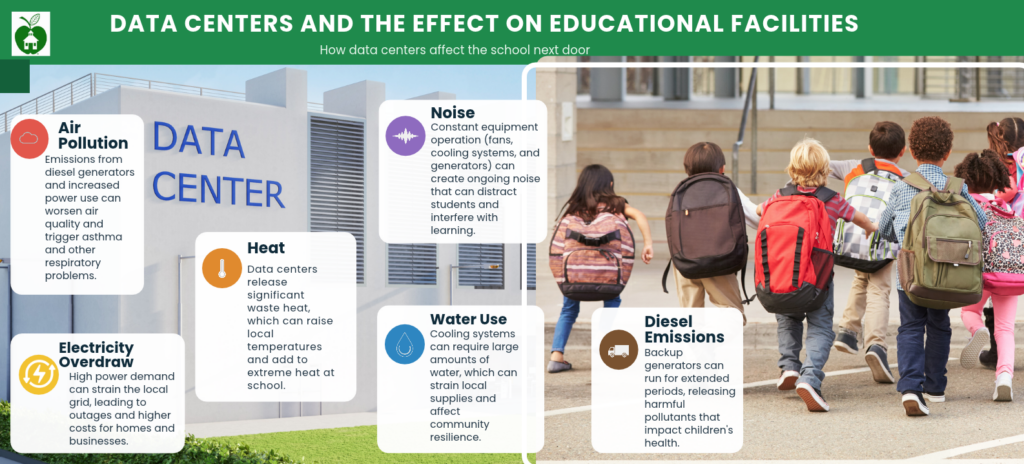
These facilities run 24/7. Cooling systems, servers, and diesel backup generators produce continuous low-frequency noise (sometimes described as a constant hum or drone) that can travel hundreds of feet or more. Research and reports from residents link this noise to sleep disruption, stress, headaches, and potential impacts on concentration and learning. One analysis of third-grade math scores found steeper declines for students in schools within a mile of data centers compared with those farther away.
Air pollution is another pathway. Much of the electricity comes from fossil fuels, and on-site diesel generators can emit high levels of nitrogen oxides (NOx) and fine particulate matter (PM2.5), pollutants linked to asthma, respiratory illness, and cardiovascular effects. Children are especially vulnerable. Modeling has projected that electricity demand from data centers could contribute to hundreds of thousands of additional asthma cases and over a thousand premature deaths annually in the US by the late 2020s.
Water use is substantial. Individual large facilities can consume millions of gallons per day, often in already-stressed regions. This huge demand can push costs onto other ratepayers, including school districts.
Sources:
- Environmental Protection Network Report: AI Data Center Boom Poses Growing Health Risks as EPA & Other Federal Agencies Weaken Protections Against Harmful Pollution
- The Energy Collective: How Much Water Do Data Centers Use?
- Lawrence Berkeley National Lab: 2024 United States Data Center Energy Usage Report
Laws are Helping
There is no single, comprehensive federal law governing data center siting, noise, or water use near schools. Federal tools include Clean Air Act permitting large diesel generators and the National Environmental Policy Act when federal land, funding, or permits are involved.
How States and Localities are Addressing the Issue
New York issued Executive Order 62 in July 2026, creating the nation’s first statewide temporary moratorium on state environmental permits for hyperscale data centers (generally 50+ MW) while the state prepares a Generic Environmental Impact Statement and a community-benefits framework. Local zoning still applies. Related legislation remains under consideration.
Model laws released in October 2026 by the Model Climate Laws Initiativegive cities and states ready-to-adapt tools, covering zoning, standards, public disclosure, community benefits, and more.
- Model Local Law: A Framework for Responsible Data Center Development — Tailored for mayors and city officials to manage zoning, noise limits, and localized water caps.
- Model State Law: The CLEAN GRID Act — Designed for state regulators to ensure new data infrastructure generates its own additional clean energy rather than overwhelming existing public utility grids.
Local action is widespread. Hundreds of jurisdictions have adopted moratoriums, special-use permitting, noise caps (often in the 50–55 dBA range at property lines), water restrictions, and setbacks from residences and in some cases schools, daycares, or other sensitive locations (examples range from a few hundred feet to 1,000–1,500+ feet). Virginia, California, Georgia, and others have seen zoning changes; some places have banned certain sizes or cooling methods outright.
These measures are still evolving. Advocates have a great opportunity to push for setbacks from schools and other sensitive areas, low-frequency noise standards, independent monitoring, clean-energy requirements, and enforceable community benefits as states and localities tackle these issues.
Learn More About How Data Centers are Impacting Schools Across the Nation
Education Week: 4 Ways AI Data Centers Can Affect Schools
As hyperscale data centers proliferate, Education Week outlines four key ways they are already affecting schools and students. Health experts highlight risks from constant noise, air pollution, light pollution, and related impacts on sleep, concentration, brain development, and lung health, especially for younger children. Communities are also grappling with frequent power outages and economic impacts, such as sharply rising utility costs that strain school budgets (as in Virginia). The article notes mitigation steps schools and families can take, such as air and noise monitoring, and flags growing local resistance, including discussions about moratoriums in multiple states.
National Education Association (NEA) Today: Why Are Data Centers Being Built So Close to Public Schools?
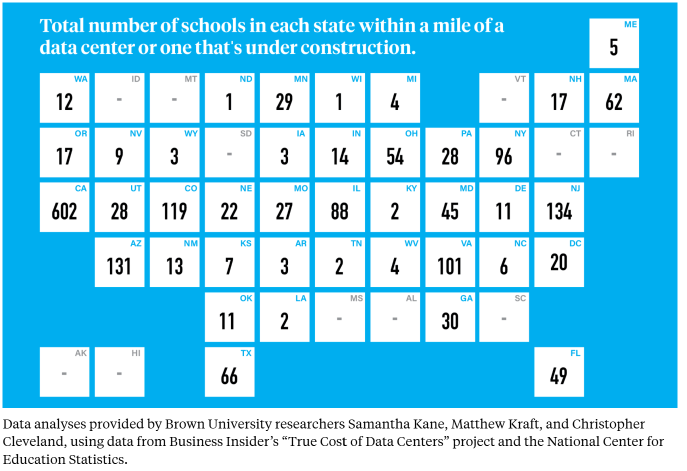
NEA Today reports that nearly 1,900 public schools are within a mile of a data center or one under construction. Brown University research found steeper declines in third-grade math scores for students in schools closer to these facilities, linking the difference to proximity and potential pollution rather than other community factors. Educators and communities are raising alarms about noise, environmental harm, strain on the grid, and large tax breaks that divert revenue from public schools (hundreds of millions annually in some states). The article spotlights successful local pushback, such as the rejection of the massive “Project Tango” hyperscale project proposed just 1,200 feet from Saddle View Elementary in Palm Beach County, Florida, after organizing by teachers, students, and parents. NEA has updated its AI policy to oppose data center construction that harms the environment and the health of educators and students or student learning.
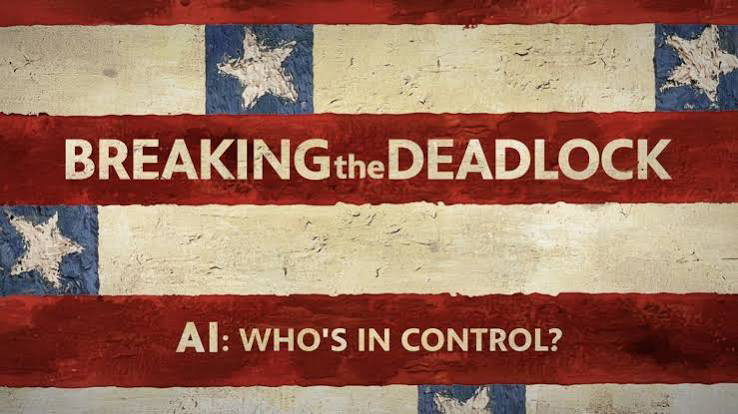
New PBS Series Discusses AI’s Impact on Society
For deeper context on the AI boom driving the growth of data centers, turn to PBS’s Breaking the Deadlock: AI – Who’s in Control?. This series brings together leaders from tech, culture, politics, and journalism to debate ethical dilemmas related to AI. One scenario examines a community fractured over a proposed data center and a large cash offer from a developer, highlighting the real-world tensions around local control, environmental and health impacts, privacy, jobs, and who ultimately decides how AI infrastructure is sited. The series asks whether society will shape AI or be shaped by it.
Other Resources and Articles
- Public-health framework (air, water, noise, cumulative impacts): Pima County Health Department/Johns Hopkins School of Public Health
- Broader health analysis: Union of Concerned Scientists
- Community and land-use impacts: World Resources Institute – 7 Ways Data Centers Affect US Communities
- World Resources Institute: Local Policy Levers