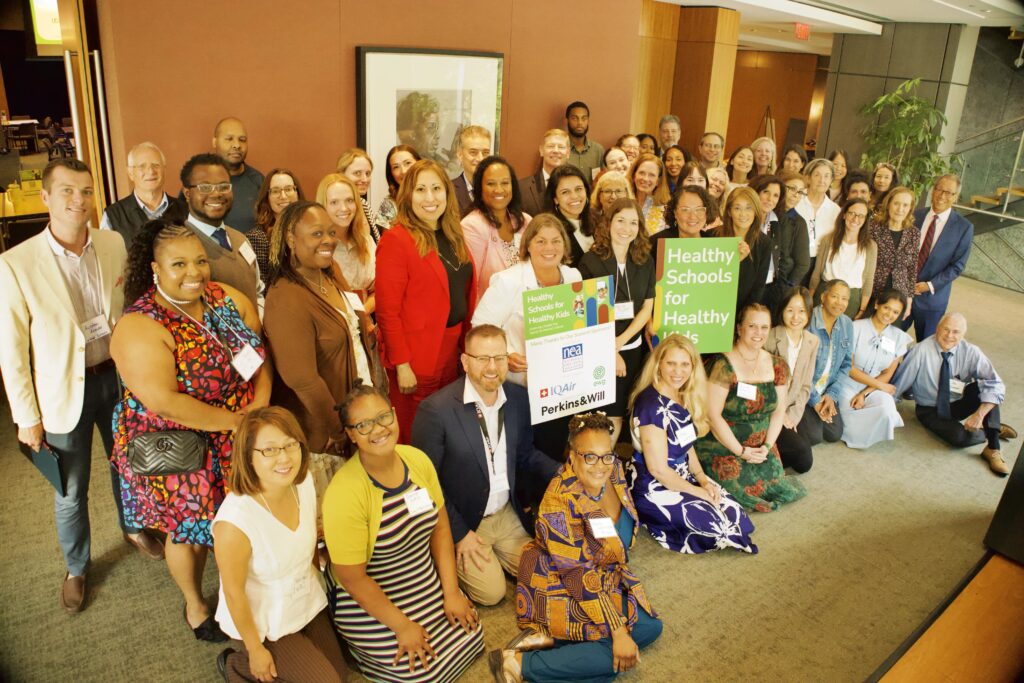
On August 5, 2026, leaders from public health, education, environmental justice, research, industry, and state, local, and federal government gathered in Washington, DC, for the Healthy Schools for Healthy Kids Summit. Organized and co-hosted by Healthy Schools Network, Children’s Environmental Health Network (CEHN), International WELL Building Institute (IWBI), Asthma and Allergy Foundation of America (AAFA), and American University’s Center for Environmental Policy, the convening turned shared concern into clearer directions.
Unhealthy schools—a continuing challenge: The day opened with a powerful framing of the challenge: aging school infrastructure, inadequate clean, fresh air, environmental hazards, and growing climate risks continue to undermine children’s health, thinking, attendance, and learning. US Senator Jack Reed (D-RI) delivered the opening address, underscoring why this moment demands a coordinated national response. He highlighted the Rebuild America’s Schools Act of 2026, which he cosponsors. This act would fund public school infrastructure improvements target and schools in disadvantaged communities to ensure school facilities are safer and healthier. A video address from Ranking Member of the House Committee on Education and the Workforce Representative Robert “Bobby” Scott (D-VA) reinforced the call for congressional leadership on his bill.
Issues, solutions, and inspiration for school environmental health: Insightful spotlight sessions set the foundation for the Summit. In “Reimagining Schools Around Children’s Health,” Nse Obot Witherspoon (CEHN) moderated experts including Erika Eitland, ScD, (Perkins&Will), Robert Amler, MD (New York Medical College), and Chia-Chia Chang (National Institute for Occupational Safety and Health) to examine how the physical learning environment shapes lifelong well-being. “Healthy Schools in a Changing Climate,” moderated by Daniel Fiorino, (American University’s Center for Environmental Policy), brought forward practical pathways for resilient buildings, indoor air quality, and climate preparedness from Whitney Austin Gray (IWBI), Joel Scheraga (Healthy Schools Network), and Taylor Brewer, MD (Children’s National Hospital). The third spotlight session, “Health Equity in America’s Schools,” moderated by Kenneth Mendez, (AAFA), connected healthy environments to educational opportunity and justice, featuring LaTricea Adams who founded Young, Gifted & Green, Jenna Riemenschneider (AAFA), and Amanda Ri’Chard-Briggs of DC Health.
In the afternoon, facilitated working groups expressed both urgency and hope, translating insight into action across four priority areas: Healthy School Buildings and Infrastructure, Indoor Air Quality, Climate Resilience, and Children’s Environmental Health Hazards. Participants surfaced concrete recommendations that will feed directly into a forthcoming Summit report on a Health-First Agenda for America’s Schools.
The day closed with an inspiring note with two student presenters from a leadership program organized by Young, Gifted & Green. Clarence and Clarissa Ruffin shared their experiences in their Flint, Michigan community, where they were exposed to the lead in drinking water, a major public health crisis of 2014. The students pledged their dedication to being environmental leaders and advocates. This shows that ultimately the measure of success is whether the next generation inherits schools that protect and nurture them.
Next step: an ambitious yet practical agenda for healthier schools: Exciting next steps are already underway. Summit leaders are reviewing the expressed priorities and consensus points that emerged on August 5 to shape the Health-First Agenda for America’s Schools. The Summit’s working sessions outlined the process for refining recommendations, coordinated advocacy, and sustaining partnerships in the months ahead. Healthy Schools Network and our cohosts used a shared platform for coordinated communications for the Summit that will serve us all well in advancing the movement with technical assistance, research, and policy advocacy aimed at ensuring every child learns in a healthy, resilient school environment.
Healthy Schools Network thanks all the speakers and participants, as well as our sponsors: the National Education Association, Environmental Working Group, IQAir, and Perkins&Will along with our media partner FacilitiesNet.com. The energy in the room proved that a health-first future for America’s schools is not only necessary, it is also achievable and together, we are building healthier schools.
Stay tuned for updates on the Health-First Agenda for America’s Schools. You can review the latest news on the Summit website and a repository for partner resources from participants and those supporting this movement.
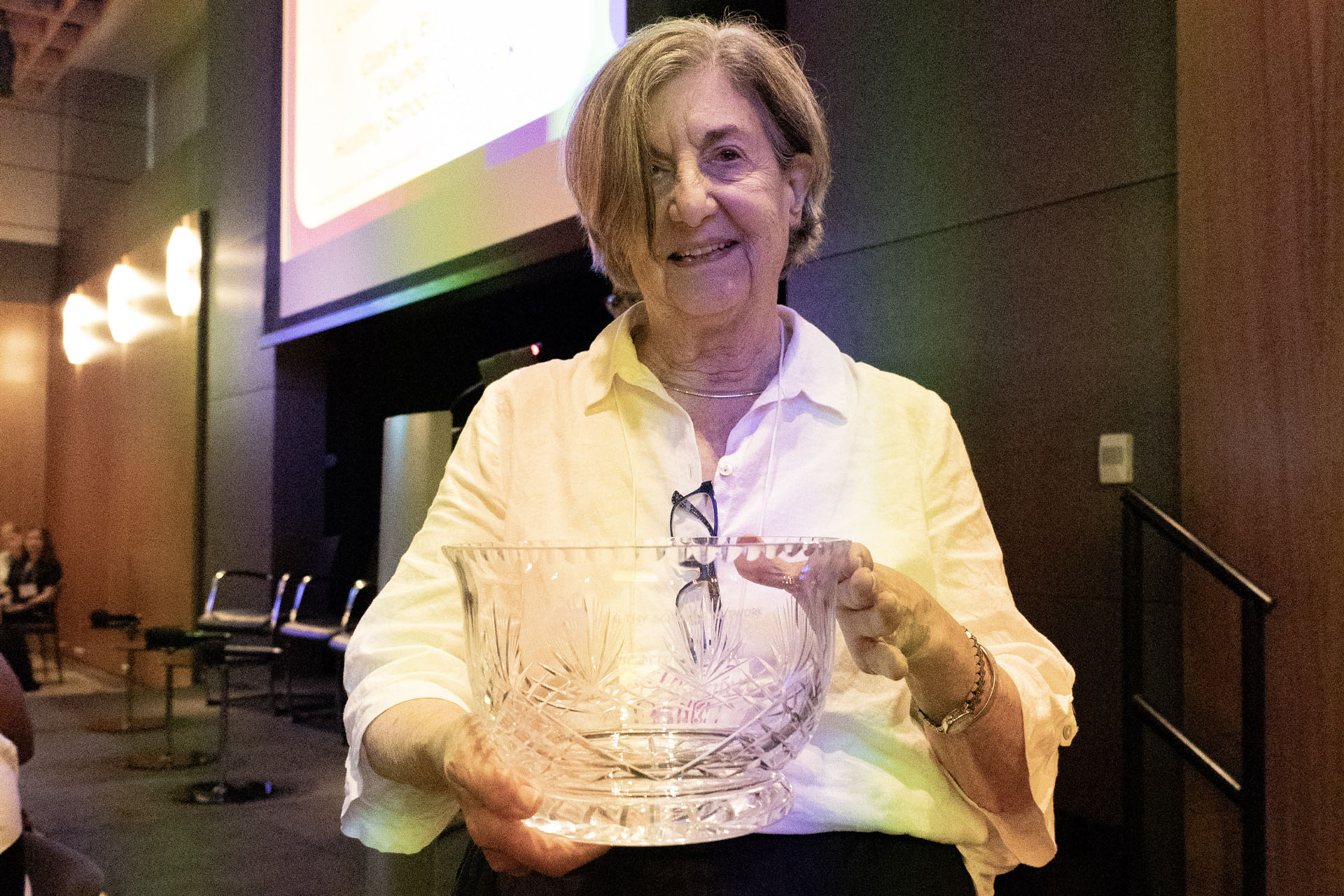
Recognizing a Lifetime of Leadership: Claire Barnett Honored at the Healthy Schools for Healthy Kids Summit
At the Healthy Schools for Healthy Kids Summit on August 5, Claire Barnett, founder and longtime leader of Healthy Schools Network, was presented with a Lifetime Service Award in recognition of founding and growing the national heathy schools movement.
For more than three decades, Claire has been a tireless advocate for children’s environmental health in schools. As founder of Healthy Schools Network, she has helped elevate the critical links between school buildings, indoor air quality, environmental hazards, and student well-being, pushing for safer learning environments, stronger policies, and greater investment in school infrastructure nationwide. She is always someone you wanted in your corner on issues affecting children and other occupants in school facilities. For more information see, What You Can Do and National Healthy Schools Day.
Her vision and persistence helped lay the foundation for the very conversations that defined this Summit and the emerging Health-First Agenda for America’s Schools. We are deeply grateful for her lifetime of service and the impact she continues to have on the health of children across the country. Congratulations, Claire! Your leadership inspires us all.
New Schools, Climate, and Health Report
A new report from the American Psychological Association and the Network for Resilient PK–12 Schools in Extreme Climates, Schools, Climate, and Health: Responding to Extreme Heat, finds that increasingly frequent and intense heat waves threaten learning, health, and well-being in US schools. This report synthesizes research on the impacts for students and educators and offers recommendations to strengthen district heat planning.
Virtual Educational Opportunities from Our Partners
Join the Association of Occupational and Environmental Clinics (AOEC) and the American Lung Association (ALA), with leaders from the Pediatric Environmental Health Specialty Units (PEHSU), for a free webinar designed for healthcare and community health providers.
Impacts of the Environment on Lung Health | September 3 | 1:00 PM ET
A recent American Lung Association survey found that many clinicians want stronger knowledge of indoor air pollutants and their effects on lung health. This session delivers practical tools to close that gap.
You’ll learn how to
- Recognize common pulmonary hazards in homes, schools, workplaces, and communities;
- Discuss prevention strategies and connect patients with trusted resources;
- Address environmental hazards, emissions, climate impacts, and behavioral factors such as smoking;
- Strengthen clinical care through better patient histories and guidance.
Target audience: primary care providers, general practitioners, community health professionals, and occupational/environmental health clinicians.
CME and CNE credits will be provided.
Expert panel: Elizabeth Friedman, MD, MPH; Jill Heins-Nesvold, MS, MBA; Marissa Hauptman, MD, MPH, FAAP; Stormy Monks, PhD, MPH; Abby Mutic, PhD, CNM
Moderator: Kathleen Fagan, MD, MPH, FACOEM
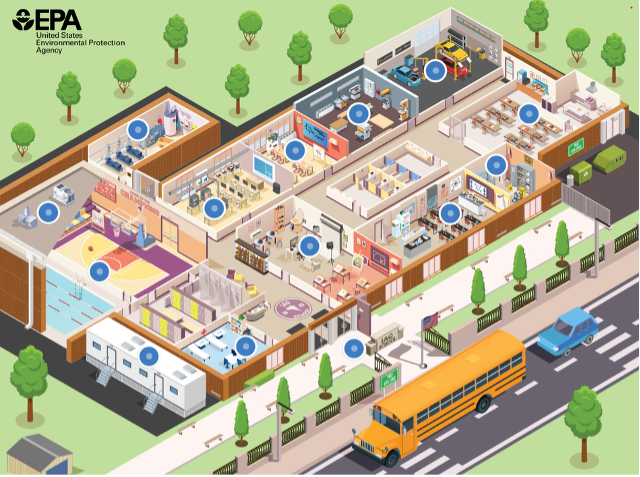
VENT-ure Into Better Air: EPA’s Interactive School Indoor Air Quality Tour
Good indoor air quality (IAQ) is essential for healthy, productive learning. Poor IAQ can drive discomfort, higher absenteeism, and longer-term health concerns for students and staff. Schools contain many different spaces, from classrooms and cafeterias to gyms, each with its own air quality challenges and opportunities. As a visual introduction to these issues, EPA has created an interactive school IAQ tour on its IAQ Tools for Schools website. Take the tour to see common concerns and practical solutions in action.